For Doctors

Use bladder diary data for accurate diagnosis and effective treatment of urological conditions.

How to integrate the diary into your practice

Prescribe a bladder diary as a standard diagnostic tool for OAB, incontinence, UTIs, and diuresis disorders. The patient keeps the diary for 3–4 days and sends the PDF report before the appointment. The data replaces 10–15 minutes of history-taking and gives an objective picture instead of subjective recall.

  1. 1. Recommend

    Prescribe the diary at the initial consultation

  2. 2. Patient downloads

    Free for iOS and Android

  3. 3. Keeps it 3–4 days

    Records each urination

  4. 4. Sends PDF

    Before the visit — you have the data ready

Clinical practice examples

Anna, 32 — clinical case
Clinical practice examples

Anna, 32

Urine leakage during physical activity, sneezing, laughter — appeared after a second delivery.

Recorded frequency and circumstances of episodes — exertional situations, morning hours. Three-day data showed 4–6 episodes per day.

Pelvic floor exercise programme (Kegel) prescribed. Diary used to assess progress at 4 weeks.

Objective progress monitoring helped tailor training intensity.

David, 48 — clinical case
Clinical practice examples

David, 48

Frequent urges after intense workouts, sometimes with leaks.

Showed correlation — lower pre-workout fluid intake → more urge episodes. Daily diuresis on training days: 800–900 ml vs. normal 1.5–2 L.

Fluid intake before, during, and after training adjusted.

Without the diary, the link between hydration and symptoms would not have been apparent.

John, 70 — clinical case
Clinical practice examples

John, 70

Waking 3–4 times per night, weak stream, feeling of incomplete emptying.

Night episodes averaged 3.2. Volume per episode: 60–90 ml (small portions). FlowSelfie data: Qmax 8 ml/s vs. normal >15 ml/s.

Evening fluid intake adjusted. Alpha-blockers prescribed. Progress re-assessed via diary at 1 month.

Combining the diary with uroflowmetry reduced the diagnostic workup from 2 visits to one.

Sample app data

The patient sends a PDF report before the visit — you see real data, not recollections.

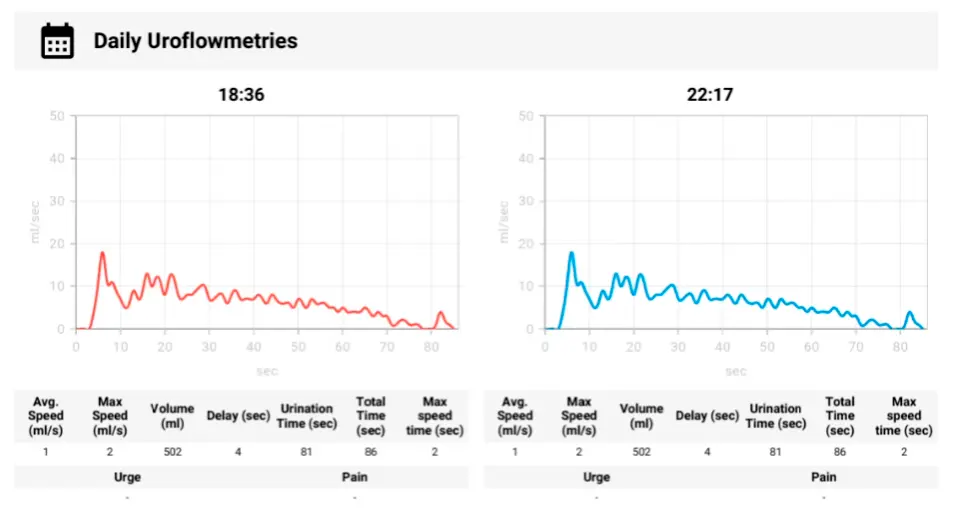
FlowSelfie uroflowmetry: Flow speed chart (ml/s). Qmax, total volume, duration — compared to normal range.

FlowSelfie uroflowmetry

Flow speed chart (ml/s). Qmax, total volume, duration — compared to normal range.

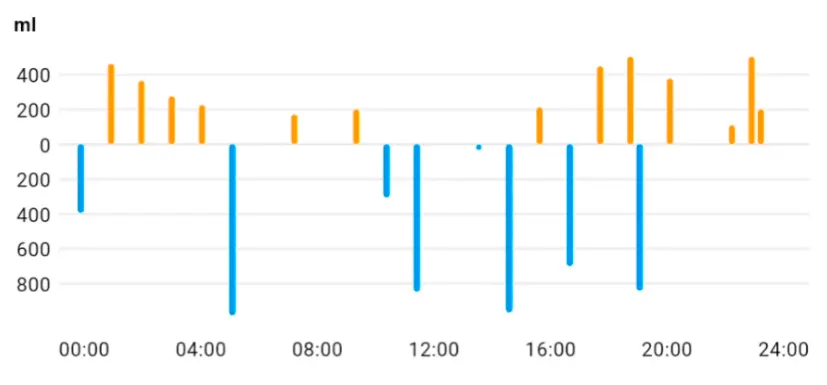
Daily urination: Bar chart: X — hours of day (00:00–24:00), Y — volume ml. Frequency and night episodes are visible.

Daily urination

Bar chart: X — hours of day (00:00–24:00), Y — volume ml. Frequency and night episodes are visible.

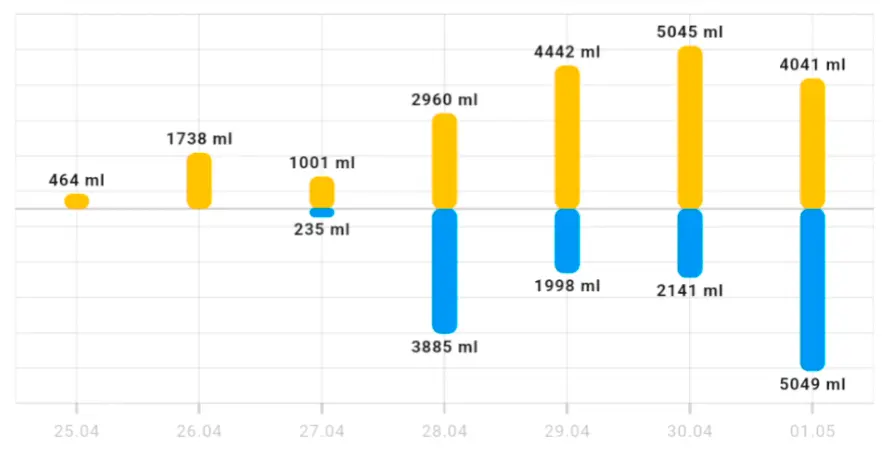
Fluid balance: Ratio of intake to output over 3–4 days. Reveals fluid intake issues.

Fluid balance

Ratio of intake to output over 3–4 days. Reveals fluid intake issues.

Tips for integrating into your workflow

  • Prescribe at the initial consultation — for OAB, incontinence, UTIs, diuresis disorders — for 3–4 days before the next visit
  • Request the PDF before the appointment — the patient sends it the day before; you come with ready data
  • Use instead of a detailed medical history — the PDF replaces 10–15 minutes of history-taking; the patient will not forget the details
  • Re-prescribe for treatment monitoring — before therapy and at 4–8 weeks for objective assessment
  • Recommend FlowSelfie for suspected obstruction — screening without lab uroflowmetry
  • Review results together — visualising symptoms increases treatment adherence